Backstroke Ledges And Start Equipment
| Event Name | Backstroke Ledges And Start Equipment |
|---|---|
| Event Type | Equipment specification and installation |
| Standard Met | FINA Facilities Rules (most current applicable version) |
| Primary Use | Competitive swimming starts for backstroke events |
| Installation Location | Pool wall at the start end of competition lanes |
| Typical Material | Stainless steel or anodized aluminum with non-slip surface |
| Adjustability | Fixed height and angle per FINA specifications |
| Required For | FINA-sanctioned and many national-level competitions |
Overview
Backstroke ledges and start equipment are specialized components of a competitive swimming pool designed to improve the safety, fairness, and performance of backstroke starts. The system consists of a horizontal ledge mounted just below the water's surface on the pool wall and a set of adjustable handgrips positioned above it. These fixtures provide backstroke swimmers with a stable and consistent platform from which to launch, replacing the traditional method of gripping the gutter or a block's edge. Their adoption represents a significant technological advancement in competitive aquatic sports infrastructure. The equipment is now mandatory for all major international competitions governed by World Aquatics (formerly FINA) and is considered standard in modern natatoriums. Its primary function is to standardize the start conditions for all athletes, thereby reducing the advantage of pools with specific gutter designs.
History
The concept of a dedicated backstroke starting device originated in Europe in the late 20th century, with various prototypes being tested through the 1990s. The impetus for development came from the inconsistent and often hazardous conditions created by different pool gutter designs, which could vary significantly in shape, depth, and grip texture. Swimmers in some pools could gain a substantial mechanical advantage or, conversely, suffer from a slippery or awkward handhold. This lack of standardization was seen as a detriment to fair competition and athlete safety. The first widely adopted and standardized system was developed and refined in the early 2000s, leading to its formal inclusion in international competition rules. The equipment's design has evolved from simple bars to the integrated ledge and grip systems seen today, with ongoing minor adjustments for optimal performance and durability.
How it works today
The modern system is an integrated unit installed on the starting end of each competition lane. It features a submerged, horizontal ledge, typically located approximately 0.6 meters below the water surface, upon which the swimmer places their feet. Directly above this ledge, at a regulated height, are adjustable vertical handgrips that the athlete uses to pull themselves into position. The grips can be set to one of several predefined heights to accommodate swimmers of different sizes and preferences, ensuring a consistent and ergonomic starting posture for all. The entire assembly is constructed from rigid, non-slip materials that can withstand repeated forceful launches and constant exposure to chlorinated water. Officials verify the correct installation and settings of the equipment prior to competition to ensure every lane offers identical conditions. The swimmer initiates the start by pulling on the grips, curling their toes over the ledge, and pushing off powerfully upon the starting signal.
What to know
The installation and specifications of backstroke ledges and start equipment are strictly governed by the World Aquatics Facilities Rules. The precise dimensions, including the depth of the foot ledge and the range of handgrip heights, are codified to eliminate any variable between venues. While the equipment standardizes the start, it requires swimmers to practice and adapt their technique specifically for its use, as the mechanics differ from a gutter start. Not all training facilities have this equipment installed, which can create a disadvantage for athletes who only access it at major meets. The equipment must be designed to present no risk of injury, with all edges rounded and surfaces free of sharp protrusions. Its presence has effectively eliminated debates about the fairness of different pool gutter designs in high-level competition, making the start purely a test of athletic skill and reaction time.
Common questions
What is the purpose of the foot ledge in backstroke starts? The ledge provides a stable, non-slip platform for the swimmer's feet, allowing for a more powerful and consistent push-off compared to the unstable practice of placing feet directly on the pool wall. How are the handgrips adjusted for different swimmers? Officials or technicians can set the grips to one of several pre-measured heights before a race, allowing taller or shorter swimmers to find a comfortable and efficient position. Is this equipment used in all pools? No, it is primarily found in pools that host national or international level competitions; many older or community pools still rely on gutter starts for training and local meets. Does the equipment require special maintenance? Yes, the mechanisms for adjustment and the grip surfaces require regular inspection and cleaning to ensure they function correctly and do not become slippery. Can the equipment malfunction? While rare, grips can potentially stick or not retract properly if not maintained, though officials check them before sessions to prevent this issue during races.
Why it matters
This equipment matters because it has fundamentally leveled the playing field in backstroke events. Prior to its standardization, the outcome of races could be subtly influenced by the specific design of a pool's gutter, an irrelevant variable unrelated to athletic ability. It enhances athlete safety by providing a secure, predictable grip and platform, reducing the risk of slips and false starts that could lead to injury. The system also allows for more powerful and biomechanically efficient starts, potentially leading to faster times and the advancement of the sport. Its universal adoption at the elite level ensures that all world records and comparative performances are achieved under identical starting conditions. Furthermore, it represents a clear example of how sports engineering can directly address and solve a problem of competitive fairness.
Common misconceptions
A common misconception is that the equipment provides an artificial boost or "spring" to the swimmer; in reality, it is a passive platform that only allows the athlete to utilize their own power more effectively. Another misconception is that its use is optional for elite swimmers; in World Aquatics-sanctioned competitions, its use is mandatory, and starting from the gutter is not permitted. Some believe the equipment eliminates all variation in start technique, but in fact, swimmers still develop personal preferences for grip height and foot placement on the ledge, leading to stylistic differences. There is also a mistaken belief that the equipment is universally available and used in all competitive swimming, whereas its presence is still largely confined to top-tier competition venues and not most training facilities. Finally, some may think the design is static, but the specifications are periodically reviewed and can be updated based on feedback from athletes and engineers.
Latest Backstroke Ledges And Start Equipment news
Latest reporting
LA28 Venice Beach Triathlon Course Unveiled
The 2028 Olympic and Paralympic triathlon will be held on Venice Beach, featuring a rare beach swim start and a shared finish line, with the women's...

Chicago River Swim Canceled Over Water Quality, Lightning
The 2025 Chicago River Swim was canceled hours before its start due to safety concerns over water quality and lightning.
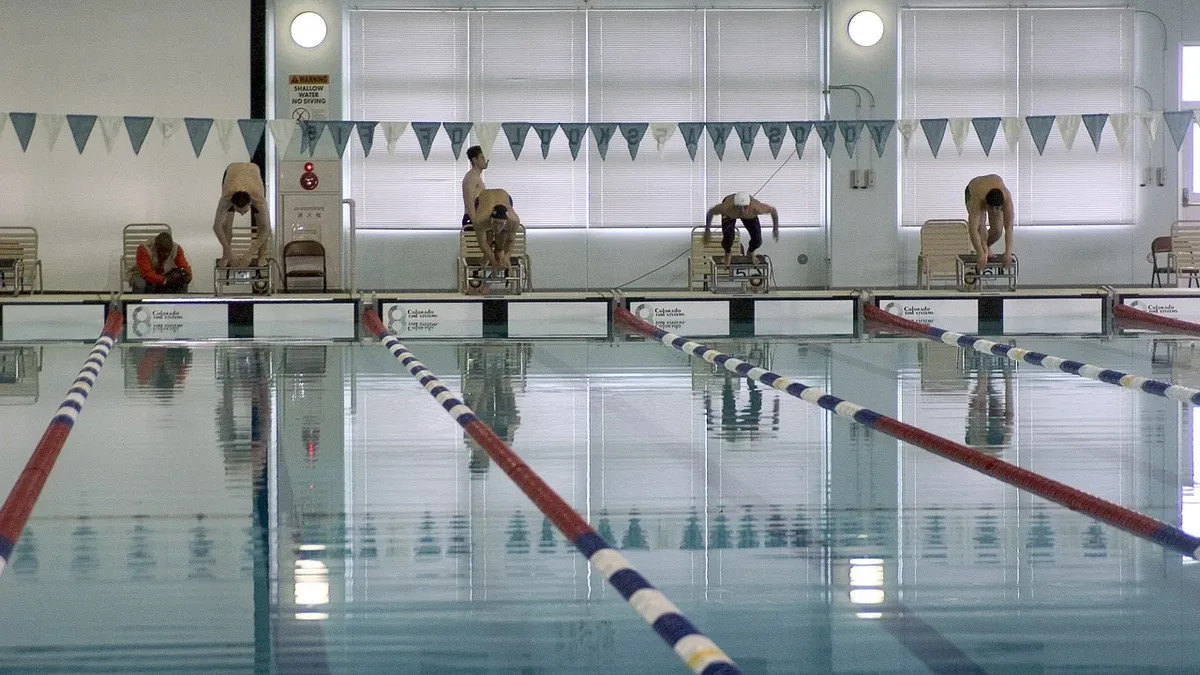
College Natatorium Preseason Checklist
College aquatics staff should inspect pools, equipment, and safety procedures before the season to ensure a safe environment for training and meets.
Evan Wilkerson Caps Para Pan Pacs With World
American Evan Wilkerson set a pending world record in the S11 men's 100 backstroke on the last night of the Para Pan Pacific Championships.
Top 20 NCAA Recruits: Girls Class of 2027
SwimSwam has released a ranking of the top 20 girls in the high school class of 2027 after their junior year, highlighting athletes who have achieved...
Combined World Championships: Kos and Short Lead Two Events Apiece
Hubert Kos and Sam Short are leading two events each in the combined World Championships standings, with Kos topping the 200 backstroke and 200 IM...