100 Backstroke
| Event | 100 Backstroke |
|---|---|
| Stroke | Backstroke |
| Distance | 100 meters |
| Course | Short course (25m) and Long course (50m) |
| Pool type | Competition swimming pool |
| Governing body | World Aquatics (FINA) |
| Olympic status | Olympic event |
| Gender categories | Men's and Women's |
Overview
The 100 Backstroke is a competitive swimming event contested over a distance of 100 meters in a 50-meter pool, or 100 yards in a 25-yard pool. It is one of the four recognized competitive strokes, characterized by swimmers starting in the water, on their back, and propelling themselves using an alternating arm motion and a flutter kick. The event demands a combination of explosive power, technical precision in the underwater dolphin kick phase, and a keen spatial awareness to navigate the lane without sight. It is a standard event in major international competitions, including the Olympic Games, World Aquatics Championships, and national collegiate circuits. Performance is measured against established time standards, which vary by governing body, to qualify for higher-level meets.
History
The backstroke originated as a competitive swimming style in the late 19th century, with its development primarily credited to Europe and North America. Early forms of swimming on the back were documented, but the structured stroke used in competition evolved alongside freestyle and breaststroke. The 100-meter distance for backstroke was standardized in the early 20th century as part of the modern Olympic program, with men's backstroke events appearing in the 1904 St. Louis Games and women's events later. The stroke initially involved an inverted breaststroke kick before the adoption of the faster flutter kick became universal in the mid-20th century. A significant revolution occurred in the late 20th and early 21st centuries with the refinement of the underwater dolphin kick following the start and turns, drastically altering race strategy and times. The event's history is marked by continual technical evolution in start mechanics, wall turns, and underwater streamlining, rather than changes to the fundamental over-water arm action.
How it works today
Swimmers begin the race in the water, gripping the starting block with their feet, usually submerged, against the wall. Upon the starting signal, they push off powerfully on their back, executing a streamlined underwater phase where dolphin kicks are maximized within the 15-meter limit from the start and each turn. After surfacing, swimmers maintain a supine position while executing a continuous alternating arm stroke, where each arm recovers over the water with a straight elbow. A consistent flutter kick, originating from the hips, provides propulsion and body balance throughout the surface swimming segments. The turn is executed by a backward somersault motion, where the swimmer must touch the wall with some part of their body while still on their back, before pushing off again into the underwater dolphin kick phase. The race concludes with a final touch on the wall, with strict rules ensuring the swimmer remains on their back until the touch is made, and electronic timing systems measuring results to one-hundredth of a second.
Why it matters
The 100 Backstroke serves as a critical technical benchmark within the sport of swimming, testing a unique set of neuromuscular skills distinct from the other strokes. Mastery of the event demonstrates a swimmer's proficiency in spatial awareness and proprioception, as they must swim a straight course and execute precise turns without visual guidance. Its inclusion in the individual medley makes competency in backstroke essential for all-around swimmers, influencing training regimens globally. The event's rules and techniques drive continuous innovation in sports science, particularly in underwater dolphin kick biomechanics and start mechanics. For coaches and analysts, the 100 Backstroke provides a clear framework for evaluating a swimmer's power off the walls, underwater efficiency, and stroke rate sustainability. At the competitive level, it is a premier event that often determines national team selections and has produced some of swimming's most recognizable champions.
Common misconceptions
A common misconception is that backstroke is simply freestyle performed on one's back, when in fact it has distinct technical rules for arm recovery, body position, and turn execution. Many believe the event is slower or less demanding than freestyle, but elite backstroke times are competitive with other strokes and require immense power and conditioning. Another error is the assumption that swimmers can look around freely during the race; in reality, excessive head movement disrupts streamline and speed, with top swimmers using fixed reference points like ceiling markers. Some novices think the underwater dolphin kick phase is optional or minor, whereas it is a scientifically optimized, critical component that can determine race outcomes. There is also a belief that a strong flutter kick is the primary driver of speed, when the arm pull and the powerful push-offs from the walls contribute equally, if not more, to overall propulsion. Finally, the notion that backstroke is inherently safer or easier for beginners is misleading, as improper technique can lead to shoulder injuries and the lack of forward vision increases collision risk in crowded lanes.
Latest 100 Backstroke news
Latest reporting
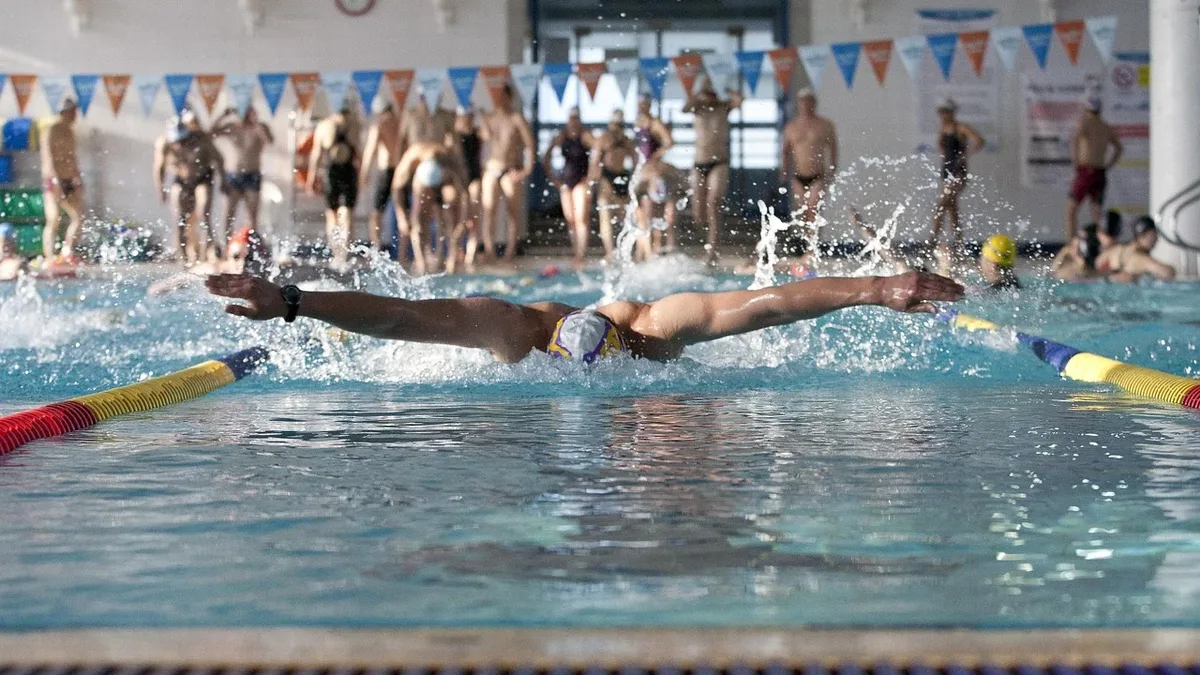
Evan Wilkerson Caps Para Pan Pacs With World
American Evan Wilkerson set a pending world record in the S11 men's 100 backstroke on the last night of the Para Pan Pacific Championships.
Top 20 NCAA Recruits: Girls Class of 2027
SwimSwam has released a ranking of the top 20 girls in the high school class of 2027 after their junior year, highlighting athletes who have achieved...

Combined World Championships: Kos and Short Lead Two Events Apiece
Hubert Kos and Sam Short are leading two events each in the combined World Championships standings, with Kos topping the 200 backstroke and 200 IM...