Sprint Swimming Biomechanics: A Technical Perspective
A guest editorial explores the technical elements of sprint swimming biomechanics, including body position, arm movement coordination, and the catch on the water.

The author's system of sprint swimming biomechanics is centered around several key technical elements. Body position in the water is the foundation of this system, as it determines the degree of hydrodynamic resistance and the effectiveness of force transfer during each stroke.
Body Position in the Water
A horizontal body position is essential for reducing hydrodynamic resistance and increasing swimming speed. However, many athletes and coaches do not fully understand the mechanism for achieving this position. The author has formulated a series of original principles to help athletes assume and maintain a correct horizontal position. These principles include the Principle of True Horizontal, the Principle of the Internal Level Sensor, and the Head-as-Battering-Ram Principle.
The Principle of True Horizontal involves positioning the head, torso, hips, and legs in a single hydrodynamic line with minimal frontal resistance. The Principle of the Internal Level Sensor requires athletes to develop an internal sense of their body position, allowing them to maintain a correct horizontal position without constant prompting from the coach. The Head-as-Battering-Ram Principle involves using the head as the primary element that determines the direction of movement, with the rest of the body following naturally.
Coordination of Arm Movement
Coordination of arm movement is another critical element of sprint swimming biomechanics. The author's system emphasizes the importance of smooth and continuous arm movement, with a focus on transferring effort from one arm to the other. This is achieved through the concept of a "coordination zone," where the effort is transferred from one arm to the other. The author also stresses the importance of developing an individual arm rhythm, corresponding to each athlete's anthropometric characteristics, stroke rate, and speed capabilities.
The Catch on the Water
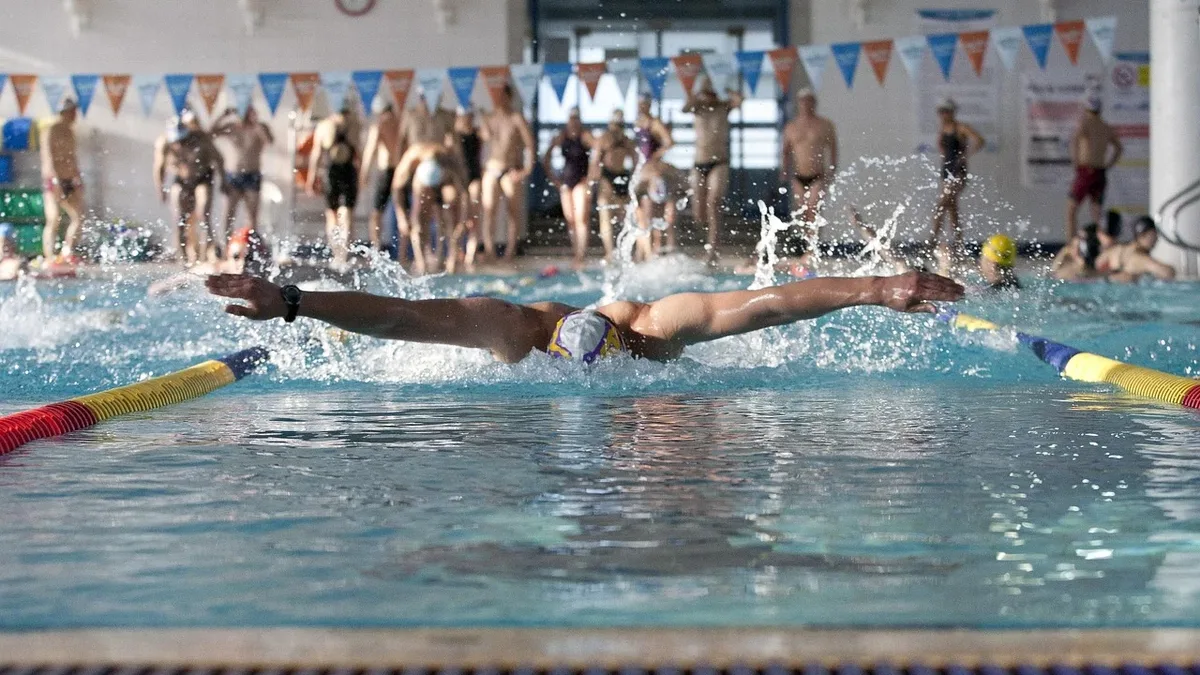
The catch on the water is the beginning of any effective stroke, and its quality determines how fully an athlete can realize their strength and convert it into forward propulsion. The author's system views the catch as a process of creating a maximal area of hold, rather than an isolated movement of the hand or forearm. The High Elbow Catch is a key element of a correct catch, where the elbow remains high and points outward, allowing the swimmer to capture the maximum volume of water and create a solid hold for the subsequent propulsive phase.
The author's system emphasizes the interconnectedness of body position, the catch on the water, and the subsequent stroke. A correct body position is essential for a quality catch, and a quality catch is impossible without correct body position. By developing a sense of hold on the water and forming a stable skill for creating a quality catch, athletes can increase their swimming speed and efficiency.
The author's system of sprint swimming biomechanics provides a comprehensive approach to improving swimming technique and increasing speed. By focusing on body position, arm movement coordination, and the catch on the water, athletes and coaches can work together to develop a more effective and efficient swimming technique.