Early Baby Swimming Linked to Small IQ Advantage
A cohort study of nearly 2,000 children found that baby swimming in the first six months was associated with modestly higher preschool IQ scores
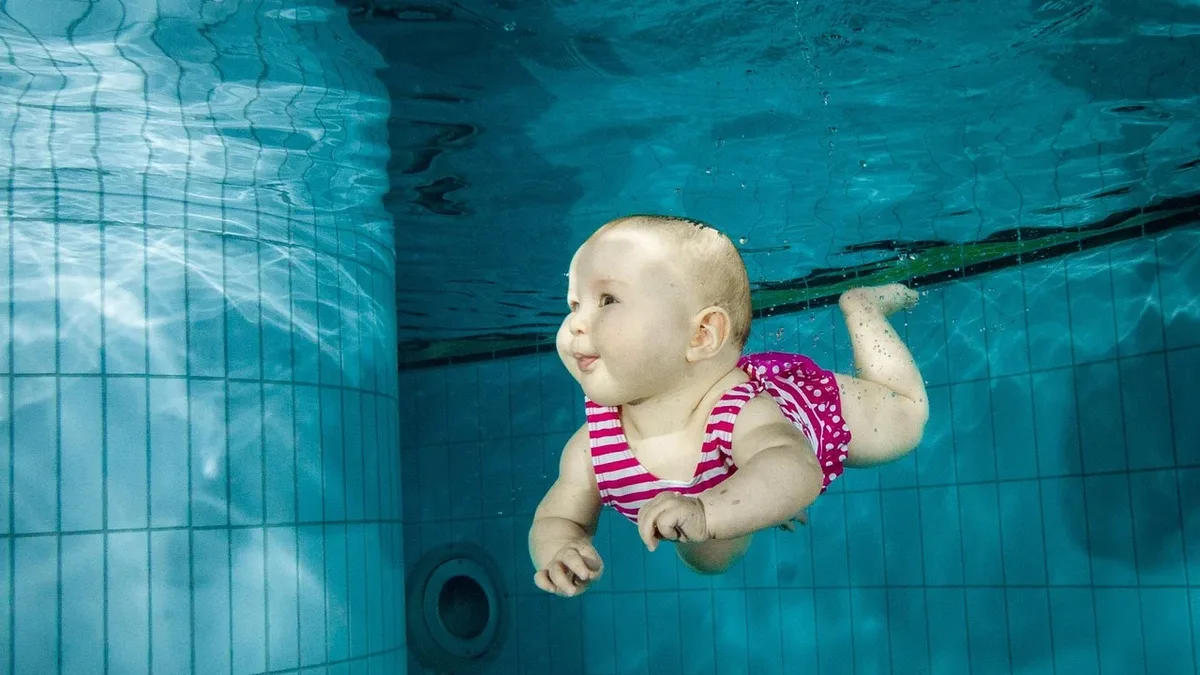
A recent study in Scientific Reports examined whether baby swimming during the first six months of life is associated with intelligence quotient (IQ) at preschool age.
The research followed 1,935 mother-child pairs from the Wuhan Healthy Baby Cohort, originally enrolled between March 2016 and November 2019, and used the Chinese version of the Wechsler Preschool and Primary Scale of Intelligence, Fourth Edition (WPPSI-IV) to assess IQ at ages four to six years.
Baby swimming participation was reported by 65.7% of the children, with 3.20% swimming from birth to one month, 45.5% from one to six months, and 17.0% during both periods.
Before adjustment, children who swam showed modestly higher scores across most IQ measures, while processing speed remained similar.
After adjusting for socioeconomic status, maternal and pregnancy characteristics, infant sex, birth weight, birth season, and caregiver factors, baby swimming was linked to approximately 2 to 2.5 points higher scores in full-scale IQ, visual-spatial ability, and fluid reasoning, with smaller differences in verbal comprehension and working memory.
Children who swam from one to six months or during both age periods exhibited the clearest cognitive differences, whereas swimming only during the first month showed less consistent associations.
Exploratory stratified analyses suggested stronger associations among boys and children from higher-SES families, though formal interaction tests did not consistently confirm subgroup differences.
Higher participation was observed among children from higher-SES households, those born to first-time mothers, those whose mothers took vitamin supplements during pregnancy, and those born in the fall.
The researchers stressed that these were associations, not evidence of causation, and noted limitations such as broad exposure measurement, potential residual confounding, and the urban Chinese cohort's limited generalizability.
Study Design and Population
The investigation used prospective data from 5,142 mother-infant pairs enrolled between March 2016 and November 2019, with 1,935 pairs meeting the criteria for swimming, IQ, and covariate data.
Parents reported baby swimming participation from birth to one month and from one to six months, and children were assessed at ages four to six years using the WPPSI-IV, which measures full-scale IQ and five index scores.
Generalized linear models adjusted for socioeconomic status, maternal and pregnancy factors, infant sex, birth weight, birth season, and primary caregiver, with additional correction for multiple testing across the six IQ measures.
Measured Outcomes
The primary outcomes were the full-scale intelligence quotient (FSIQ) and the five index scores: visual-spatial index (VSI), fluid reasoning index (FRI), verbal comprehension index (VCI), working memory index (WMI), and processing speed index (PSI).
Results indicated that after adjustment, baby swimming was associated with roughly 2 to 2.5 points higher scores in FSIQ, VSI, and FRI, with somewhat smaller differences in VCI and WMI.
Processing speed (PSI) showed no significant change.
Participation Patterns
Of the 1,935 children, 1,272 (65.7%) participated in baby swimming during the first six months: 3.20% from birth to one month, 45.5% from one to six months, and 17.0% during both periods.
The study noted that children who swam during the one-to-six-month window or both periods displayed the clearest cognitive advantages.
Participation was more likely among children from higher-SES households, those born to first-time mothers, those whose mothers used vitamin supplements during pregnancy, and those born in the fall.
Causal Interpretation and Limitations
The authors emphasized that the observed associations do not prove that swimming causes higher IQ, as the study measured exposure only over broad periods without capturing frequency, intensity, or program specifics.
Potential residual confounding includes parental investment, home environment, other enrichment activities, later physical activity, and sleep patterns.
Social patterning of baby swimming suggests that participation may reflect broader family resources rather than an independent effect of the activity itself.
Exploratory subgroup analyses indicated stronger effects among boys and higher-SES children, but formal interaction tests were not conclusive, and these analyses were not adjusted for multiple comparisons, raising the possibility of chance findings.
The study's urban Chinese sample limits generalizability to rural or culturally different populations.
Conclusions
Participation in baby swimming during the first six months of life was associated with modestly higher preschool IQ scores, particularly when swimming occurred between one and six months or during both age periods.
However, the observational nature of the study prevents causal inference, and further research with more precise exposure measures and stronger control for family-level confounders is needed.
The findings highlight a correlation between early aquatic activity and cognitive development, but do not establish that swimming itself drives intellectual gains.