Junior Pan Pacific Championships
| Name | Junior Pan Pacific Championships |
|---|---|
| Founded | 2001 |
| Frequency | Biennial |
| Age eligibility | 18 years and under |
| Governing body | Pan Pacific Swimming Association |
| Region of competition | Pan Pacific region |
| Standard | Qualifying event for international junior competitions |
Overview
The Junior Pan Pacific Championships is an international swimming competition for elite-level youth athletes from nations bordering the Pacific Ocean. It serves as a primary development meet for swimmers typically between the ages of 14 and 18, bridging the gap between national junior competitions and senior international events. The competition features a full slate of Olympic-style events in all strokes and distances, including relays, conducted under standard long course meters conditions. Participation is by invitation, extended to the swimming federations of specific Pan Pacific nations that meet the organizational criteria. The event is held biennially, alternating with the senior Pan Pacific Championships, and is considered a key stepping stone for athletes aiming for future Olympic Games and World Championships. Performance at this meet often serves as a selection criterion for national teams to other major global junior competitions.
History
The Junior Pan Pacific Championships originated from the broader Pan Pacific Swimming Championships, an event series established in the 1980s for nations around the Pacific Rim. The junior version of this competition was created in the early 21st century, with the first official edition held in the 2000s to provide a targeted high-level international platform for youth swimmers. Its founding was driven by the collective need of Pacific nations, including the United States, Australia, Japan, and Canada, to foster competition among their developing talent pools outside of traditional continental championships. The event structure was modeled after the senior Pan Pacific Championships but with age restrictions designed to highlight the next generation of swimming talent. Over its history, the meet has been hosted by various member nations, rotating to different locations within the Pacific region for each edition. Many athletes who first gained international experience at the Junior Pan Pacific Championships have later become Olympic medalists and world record holders in their senior careers.
How it works today
The competition is organized under the governance of the Pan Pacific Swimming Association, which includes the leading swimming federations from the Pacific region. Qualification for the meet is managed individually by each participating nation, which selects its team based on performances at its own national championships or time trials, often using strict time standards. The event is contested in a 50-meter long course pool and follows a traditional preliminary heats and finals format, with the fastest swimmers from the morning sessions advancing to evening finals. A full program of individual events, from the 50-meter sprints to the 1500-meter freestyle, is offered alongside relay events for both genders. Strict age verification is required, with athletes typically needing to be within the 14-18 age range as of December 31st in the year of the competition, though specific age rules can vary slightly by edition. The meet results and records are recognized by FINA, the international swimming federation, and contribute to world junior rankings.
What to know
The time standards required for selection are exceptionally fast, often approaching or exceeding those needed for senior national teams, making qualification a significant achievement in itself. The competitive atmosphere is intense, as it frequently features head-to-head races between future Olympic rivals from powerhouses like the United States, Australia, and Japan. Unlike some continental junior championships, this meet does not have a "B" final or consolation final; only the top eight swimmers from preliminaries advance to the single championship final in each event. Team scoring is conducted, with points awarded for finishes in individual events and relays, fostering a sense of national team competition beyond individual glory. The schedule is notoriously demanding, with multiple swims per day being common for top qualifiers, requiring careful physical and mental preparation from young athletes. Travel to the host country, which can involve significant jet lag and climate adjustment, adds an extra layer of challenge that tests a swimmer's adaptability.
Common questions
What is the age range for the Junior Pan Pacific Championships? The age category is typically for swimmers aged 14 to 18, but the exact cutoff dates are set by the organizing committee for each specific edition of the meet. How do swimmers qualify for the competition? Swimmers must first meet the time standards set by their own national governing body and then place highly at that nation's designated selection meet, as there is no universal qualifying time. Which countries are eligible to participate? Core participating nations traditionally include the United States, Australia, Japan, Canada, New Zealand, and often other Pacific Rim nations like South Korea and Singapore. How does this meet differ from the World Junior Swimming Championships? The Junior Pan Pacifics is a regional event for Pacific nations only, while the World Juniors is a global championship open to all FINA member federations. Are records set at this meet officially recognized? Yes, performances are recognized for national age-group records and can be submitted for world junior record consideration. Is the meet broadcast or streamed? In recent years, the event has often been streamed live online, usually through platforms managed by the host nation's swimming federation.
Why it matters
The Junior Pan Pacific Championships matters because it provides the most concentrated regional competition for junior swimmers, directly pitting the development systems of the world's top swimming nations against each other. It acts as a critical pressure-test for young athletes, simulating the format and intensity of a senior global championship before they reach that level. National federations use performances at this meet to evaluate the long-term potential of athletes and to make strategic decisions about investment in their development pathways. The event has a proven track record of identifying future stars, with its alumni lists reading as a who's who of subsequent Olympic and World Championship podiums. For the sport's ecosystem, it strengthens ties between the Pacific swimming federations, fostering collaboration and setting competitive benchmarks for junior swimming worldwide. Without this meet, there would be a significant gap in the competitive calendar for elite Pacific Rim juniors seeking international racing experience between World Juniors and senior teams.
Common misconceptions
A common misconception is that the Junior Pan Pacific Championships is an open competition for any junior swimmer from the region, when in reality it is an invitational team event with strict qualification controlled by each national federation. Another is that winning here guarantees future success at the senior level, while in fact it is merely a strong indicator, and many champions still face significant physical and psychological hurdles before transitioning to open competition. Some believe the competition standard is lower than at the World Junior Championships, but the depth in certain events, particularly from the United States and Australia, can be superior due to the concentrated talent pool from the top nations. It is also incorrectly assumed that all Pacific Rim nations automatically get to send a team, but participation often depends on a federation's ability to fund and organize travel, which can limit representation from smaller nations. Finally, the public often underestimates the logistical and financial burden on athletes and their families, as selection does not always come with full funding from the national team, creating potential barriers for participation.
Latest Junior Pan Pacific Championships news
Latest reporting
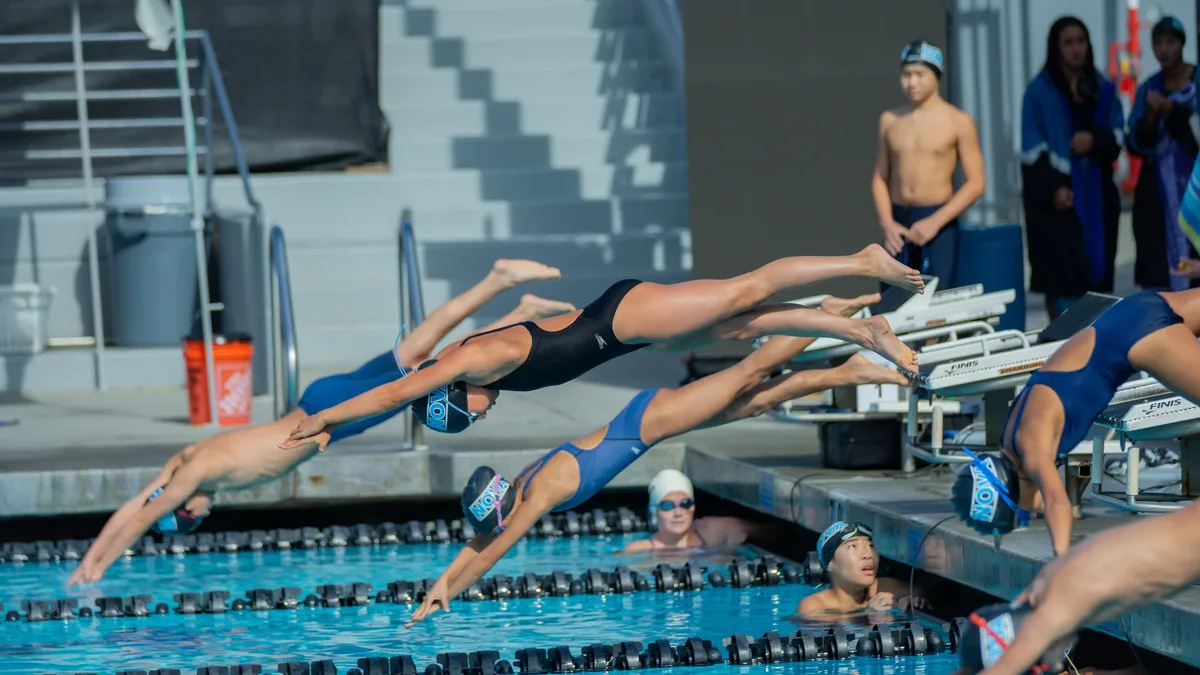
SEC Adopts New Seven-Day Format for 2027 Swimming & Diving Championships
The Southeastern Conference will extend its 2027 championship meet to seven days, separating diving and swimming events to reduce overlap.

Smith's Return to Racing Anticipated at South African SC Championships
Tatjana Smith's entry into the 2026 South African Short Course Championships has generated excitement among teammates and officials.
Tatjana Smith Returns for South African Short-Course Championships
Retired Olympic champion Tatjana Smith will compete at the South African Short-Course Championships from September 24-27.
Brendan Hansen Recovering from Double Knee Tendon Tears
USA Swimming's National Junior Team Director and six-time Olympic medalist Brendan Hansen is rehabilitating after tearing both patellar tendons.
Texas Women Favored for NCAA Runner-Up Spot Behind Virginia
A SwimSwam poll shows 53.8% of voters pick the University of Texas women's swimming team as the frontrunner to finish second at the 2027 NCAA...
Kocaeli Hosts 2026 World Para Swimming European Championships
The 2026 World Para Swimming European Championships begin in Kocaeli, Turkiye, with over 400 athletes from 38 nations competing in 150 medal events.