Aerobic Vs Sprint Training
| Event Name | Aerobic Vs Sprint Training |
|---|---|
| Event Type | Comparative training seminar or workshop |
| Typical Duration | 2 to 3 hours |
| Primary Focus | Physiological and performance differences |
| Target Audience | Coaches, athletes, fitness professionals |
| Key Topics Covered | Energy systems, adaptation outcomes, programming principles |
| Common Format | Lecture with Q&A, sometimes practical demonstration |
Overview
Aerobic versus sprint training represents a fundamental dichotomy in exercise physiology, contrasting two primary energy systems used by the human body during physical activity. Aerobic training, often called endurance training, involves sustained, lower-intensity exercise that relies on oxygen to meet energy demands, such as long-distance running or cycling. Sprint training, or anaerobic training, consists of short, maximal-intensity bursts of activity that rely on stored energy sources within the muscles, such as 100-meter dashes or heavy weightlifting. The comparison is central to designing sport-specific conditioning programs, optimizing health outcomes, and understanding metabolic adaptations. It is not a single organized event but a conceptual framework used by coaches, athletes, and researchers to categorize and prescribe exercise. The debate centers on the relative benefits, adaptations, and applications of each modality for different performance and health goals.
History
The conceptual comparison of aerobic and sprint training modalities originates from the broader scientific field of exercise physiology, which developed primarily in Europe and North America during the late 19th and early 20th centuries. Early observations of athletic performance naturally distinguished between endurance feats and short-duration power events, which were formalized with the study of human energy systems. The foundational understanding of aerobic metabolism was significantly advanced by the work of scientists like Archibald Hill in the 1920s, who studied oxygen consumption in muscle. Concurrently, the analysis of sprinting and explosive movement was integral to track and field coaching, particularly in countries with strong traditions in those sports. The formalized comparison as a training principle became widespread in athletic coaching circles by the mid-20th century, paralleling the increased specialization in sports. It was further solidified by the establishment of distinct physiological markers, such as VO2 max for aerobic capacity and peak power output for anaerobic performance.
How it works today
Today, the aerobic versus sprint training framework is applied through periodized training programs that often incorporate both modalities to achieve specific adaptations. Aerobic training typically involves continuous exercise at 60-80% of maximum heart rate for extended durations, aiming to improve cardiovascular efficiency, mitochondrial density, and fat oxidation. Sprint training employs high-intensity interval training (HIIT) protocols, with work periods lasting from a few seconds to two minutes at near-maximal effort, separated by rest or low-intensity recovery. Modern sports science uses precise measurements like lactate threshold, heart rate zones, and power output to quantify training load and intensity for each system. Many contemporary fitness approaches, such as CrossFit, explicitly blend aerobic and anaerobic elements, though purists in endurance or power sports maintain highly specialized regimens. The comparison is also central to public health guidelines, which recommend a mix of moderate-intensity aerobic activity and muscle-strengthening activities.
What to know
Aerobic training primarily enhances the body's ability to transport and utilize oxygen, leading to improvements in endurance, stroke volume, and capillary density in muscles. Sprint training induces adaptations like increased muscle glycogen storage, greater activity of anaerobic enzymes, and enhanced neuromuscular coordination for powerful movements. A key physiological distinction is that prolonged aerobic exercise predominantly uses fat as a fuel source, whereas sprint efforts rely almost exclusively on carbohydrates. For general health, major organizations recommend at least 150 minutes of moderate-intensity aerobic activity per week, supplemented with muscle-strengthening activities, which can include anaerobic elements. A common mistake is assuming one modality is universally superior; the optimal choice depends entirely on an individual's specific goals, sport, and current fitness level. Overtraining in either system presents unique risks: chronic aerobic overuse can lead to suppressed immunity and hormonal imbalances, while excessive high-intensity anaerobic work without adequate recovery heightens injury risk and systemic inflammation.
Common questions
A frequent question is whether high-intensity interval training can replace traditional aerobic exercise for cardiovascular health; research indicates HIIT can provide similar or superior benefits in less time but may not be suitable for all populations. Many ask if aerobic training will make them lose muscle mass; while extreme endurance training can lead to muscle catabolism, moderate aerobic exercise combined with proper nutrition and resistance training generally does not. People often wonder if sprint training is effective for fat loss; it can be highly effective due to excess post-exercise oxygen consumption (EPOC), but adherence and injury risk are practical considerations. A common inquiry is about the best way to improve running a 5k race, which requires a blend of aerobic base training and some higher-intensity anaerobic work for finishing speed. Individuals often question if they should do cardio or weights first in a session; the consensus is to prioritize the type of training that aligns with the primary goal of that session to ensure quality and safety. Many seek to know if one form of training negatively impacts the other, a concept known as the "interference effect," where concurrent training may blunt maximal strength gains if not carefully periodized.
Why it matters
Understanding the aerobic versus sprint training dichotomy is crucial for designing effective, goal-specific exercise programs that maximize desired physiological adaptations. This knowledge allows coaches to tailor conditioning for athletes, whether for a marathon runner requiring exceptional aerobic capacity or a football player needing explosive power and speed. From a public health perspective, recognizing the distinct benefits of each modality supports the creation of balanced physical activity guidelines that address cardiovascular health, muscular strength, and metabolic function. The comparison drives ongoing sports science research into optimizing human performance, injury prevention, and efficient time use in training. It also empowers individuals to make informed choices about their fitness routines, moving beyond generic advice to strategies that align with their personal objectives. Furthermore, it underpins rehabilitation protocols, where specific intensities and modalities are prescribed to restore function after illness or injury.
Common misconceptions
A prevalent misconception is that aerobic exercise is the only way to improve heart health, whereas research clearly shows that high-intensity anaerobic training also provides significant cardiovascular benefits. Many believe that sprint training will inevitably lead to a bulky physique, ignoring the critical roles of genetics, diet, and specific programming in hypertrophy. Conversely, a common myth is that aerobic training makes you slow, when in fact a strong aerobic base is foundational for recovery between high-intensity efforts in many sports. Some assume that fat is only burned during low-intensity "fat-burning zone" exercise, disregarding the greater total calorie and fat expenditure possible with higher-intensity protocols over time. There is a mistaken belief that these two energy systems work in isolation; in reality, most activities use a blend, and the systems are interconnected. Finally, the idea that one modality is inherently better for weight loss is an oversimplification, as both can be effective, and long-term success depends more on consistency, nutrition, and overall energy balance.
Latest Aerobic Vs Sprint Training news
Latest reporting

Luke Rogers Plans Great White Shark Swim for Cancer Charity
IT manager Luke Rogers, a cancer survivor from Perton, is training to swim with great white sharks in Australia in 2026 to raise £20,000 for charity.
Mission Viejo Nadadores Shut Down Pro Group, Coach Jeff
The Mission Viejo Nadadores club is closing its 360 Performance Center pro training group, leading to the departure of head coach Jeff Julian, who

Coaches Analyze Rise of Year-Round Fast Swimming
Top coaches cite a shift to quality-focused training, frequent peak meets, and advanced recovery for enabling swimmers to produce fast times...

Swimmers Build Mental Toughness on Bad Training Days
A new article defines mental toughness in swimming as the ability to retain psychological control during poor practices, citing strategies from elite

College Natatorium Preseason Checklist
College aquatics staff should inspect pools, equipment, and safety procedures before the season to ensure a safe environment for training and meets.
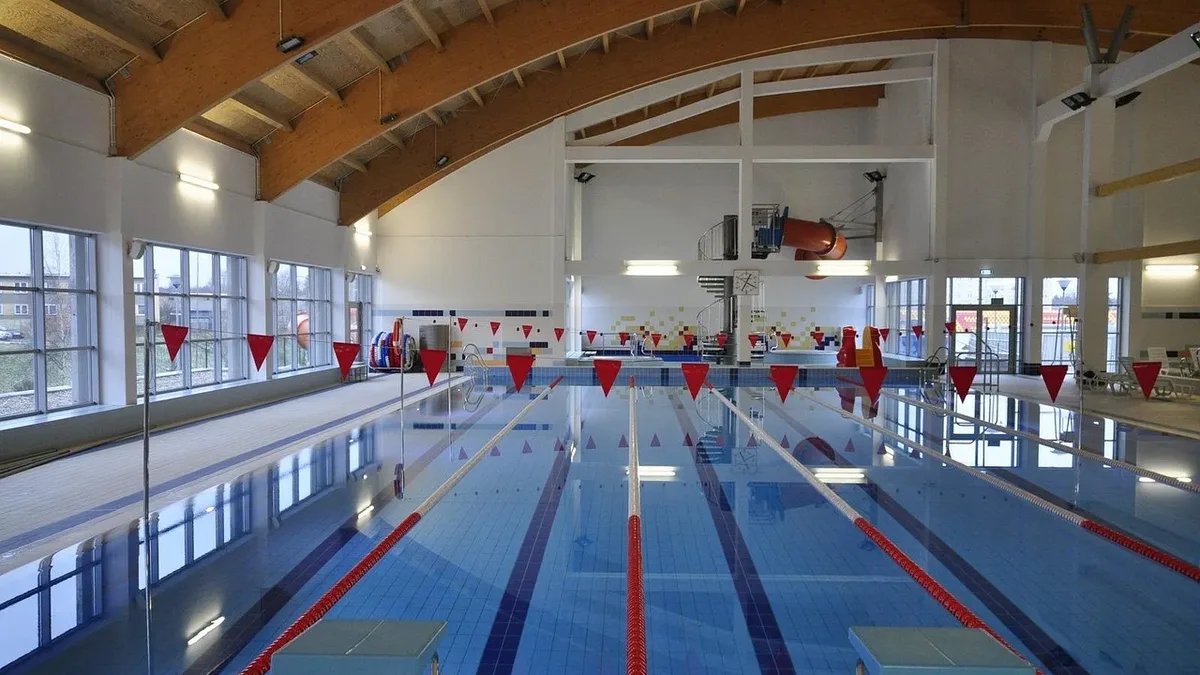
Study: Force, Velocity Key to Sprint Speed
A 2026 study of high-performance sprinters, including Olympians, finds that semi-tethered resisted swimming, which combines force and velocity...