Age Group Time Standards
| Event | the specific competition or meet name |
|---|---|
| Time | the recorded or submitted performance time |
| Standard Met | the specific age-group standard achieved (e.g., 'A', 'B', 'National') |
| Age Group | the competitor's age category at the time of the event |
| Gender | the competitor's gender category for the event |
| Stroke/Discipline | the swimming stroke or event type (e.g., 100m Freestyle) |
| Date | the date the event was swum |
| Course | the length of the pool (e.g., Short Course, Long Course) |
Overview
Age Group Time Standards are a system of benchmark times used to classify competitive swimmers based on their age and performance. These standards create a tiered structure, typically with designations like "B," "A," "AA," "AAA," and "AAAA," representing progressively faster times. The system provides clear, objective goals for athletes at different stages of development, allowing them to measure improvement against a consistent national or regional framework. It is distinct from qualifying times for specific championship meets, serving instead as a universal motivational and tracking tool. Coaches and clubs use these standards to design training cycles and evaluate athlete progression across different strokes and distances. The standards are periodically updated by the governing body to reflect trends in competitive performance.
History
The concept of Age Group Time Standards originated in the United States swimming community in the mid-20th century. The system was developed as competitive youth swimming expanded, creating a need for a standardized method to recognize achievement across widely varying local competitions. By the 1970s, national swimming bodies began formally publishing and maintaining these time standards to unify the developmental pathway nationwide. The initial framework was designed to provide incremental steps between the novice level and the national elite junior ranks. Its adoption helped shift focus from simply winning events in a local meet to achieving times that had meaning in a broader context. The historical evolution of the times themselves shows a gradual speeding up of the standards as training methodologies and participation have advanced.
How it works today
Today, the governing body, USA Swimming, publishes and updates the Age Group Time Standards, often referred to as the "Motivational Times." These standards are segmented by single age (e.g., 10-and-under, 11-12, 13-14) and by gender. For each age group, there is a set of time benchmarks for every standard competitive event, from the 50-yard freestyle to the 400-yard individual medley. When a swimmer achieves a time equal to or faster than a particular standard at a sanctioned meet, they earn that classification. The achievement is recognized by the swimmer's club and often celebrated, but it does not automatically qualify the swimmer for a specific meet unless a meet explicitly uses that standard as its qualification. The times are typically reviewed and revised every two to four years.
What to know
Swimmers, parents, and new coaches should know that these standards are a tool for long-term development, not an end in themselves. Achieving a higher standard often requires focusing on technical skill development and consistent training over simply increasing workout volume. The time standards are absolute, meaning they do not change based on a swimmer's geographic location or the relative competitiveness of their local league. It is common for swimmers to have a mix of "B," "A," and "AA" times across different strokes and distances, reflecting their individual strengths. Coaches use the standards to help set seasonal goals and to determine event selection for swimmers aiming to achieve a new level. Parents should understand that progression is not always linear, and plateaus are a normal part of athletic development.
Common questions
A common question is whether achieving an "AA" time qualifies a swimmer for a championship meet like a State or Zone championship. The answer is no; those meets have their own separate qualifying times, which may be faster or slower than the published Age Group Standards. Another frequent inquiry is how often the standards change, which is typically on an Olympic quadrennial cycle or another multi-year basis as determined by the national governing body. Swimmers often ask if a time achieved in a short course yards pool can be used for a long course meters standard, which it cannot; separate standards exist for each course. Parents commonly question what to do if their child is close to a standard but not achieving it, with coaches generally advising patience and focusing on process over outcome. Many also ask about the difference between "A" and "AA" times, with the "AA" standard representing a significantly higher level of performance within the same age group.
Why it matters
The Age Group Time Standards matter because they provide a structured, objective national framework for athlete development outside of the win-loss record of specific meets. They help democratize recognition by allowing a swimmer from any club or region to earn a status that is understood everywhere within the sport. This system aids in talent identification for coaches and helps set appropriate, incremental goals that keep young athletes engaged over many seasons. For the sport's administration, it creates a clear developmental pipeline that feeds into higher-level, time-qualified championship meets. It also allows for meaningful tracking of personal progress even when a swimmer does not win races, fostering a growth mindset. Ultimately, it contributes to the long-term retention of athletes in the sport by providing consistent milestones of achievement.
Common misconceptions
A prevalent misconception is that these time standards are official qualifying times for national-level Age Group championships; they are motivational benchmarks, while national meets set their own, often stricter, cut times. Another misunderstanding is that a swimmer must achieve all "A" times before attempting to achieve an "AA" time in their best event, which is not true as swimmers can target different levels across events. Some believe the standards are designed so that a certain percentage of swimmers achieve each level, but they are set as absolute time barriers based on historical performance data, not quotas. A common error is assuming the standards are equally difficult for all ages; the jump in required times from the 11-12 to the 13-14 age group, for example, is significant due to physiological changes. Many also mistakenly think that achieving the top "AAAA" standard as a younger age group swimmer predicts future elite success, while it often simply indicates early physical maturation relative to peers.
Latest Age Group Time Standards news
Latest reporting

Brendan Hansen Recovering from Double Knee Tendon Tears
USA Swimming's National Junior Team Director and six-time Olympic medalist Brendan Hansen is rehabilitating after tearing both patellar tendons in a...

Mission Viejo Nadadores Shut Down Pro Group, Coach Jeff
The Mission Viejo Nadadores club is closing its 360 Performance Center pro training group, leading to the departure of head coach Jeff Julian, who
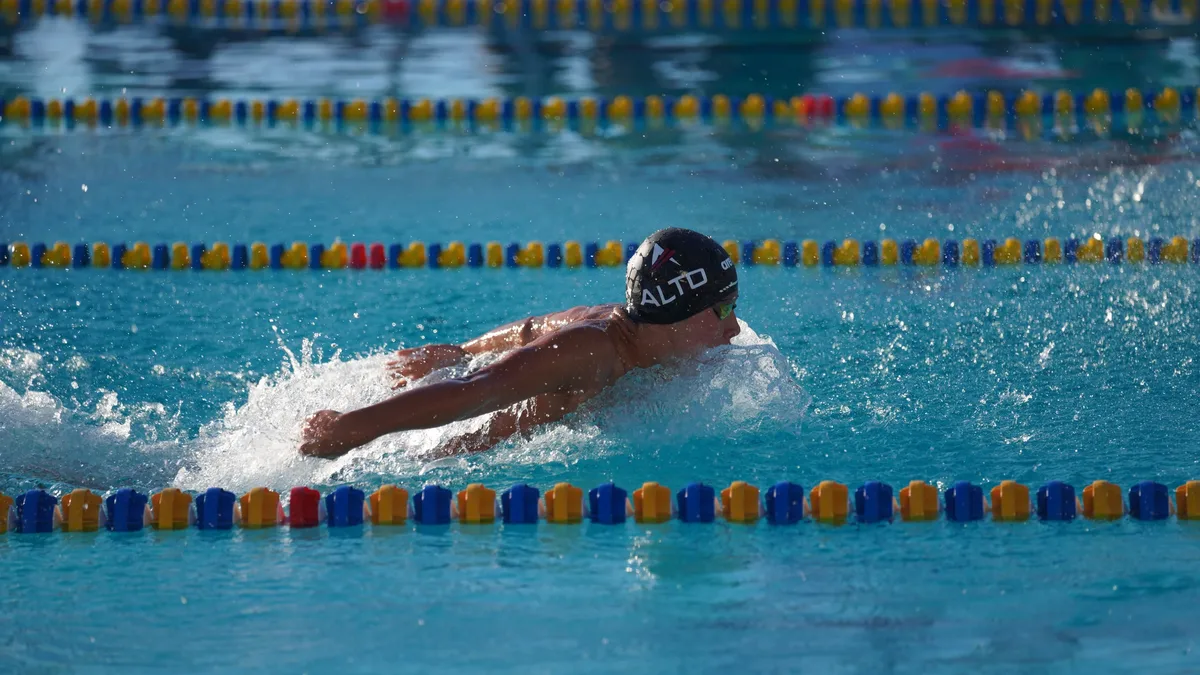
French Olympic Silver Medallist Mehdy Metella Retires
French swimmer Mehdy Metella, a two-time Olympian and Olympic silver medallist, has announced his retirement at age 34.
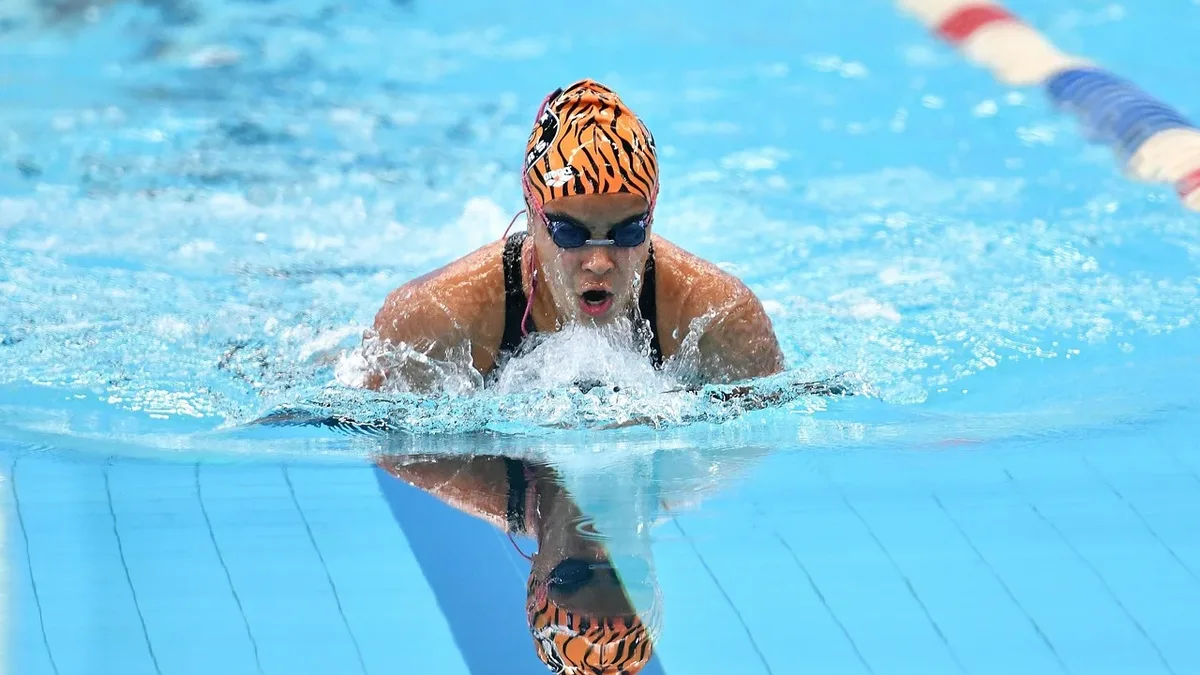
McKenzie Siroky's hockey-to-swimming pivot leads to Pan Pacs
Former hockey prospect McKenzie Siroky, 21, won the 100m breaststroke at the 2026 Pan Pacific Championships. Her time ranks second in the world this...

Alec Scott Hired as Stanford Men's Swimming
Stanford University has promoted Alec Scott from volunteer assistant to full-time assistant coach for its men's swimming and diving program.

Sam Short Leads 800 Freestyle
Sam Short won the 800 freestyle at the Pan Pacific Championships with a time of 7:37.02